

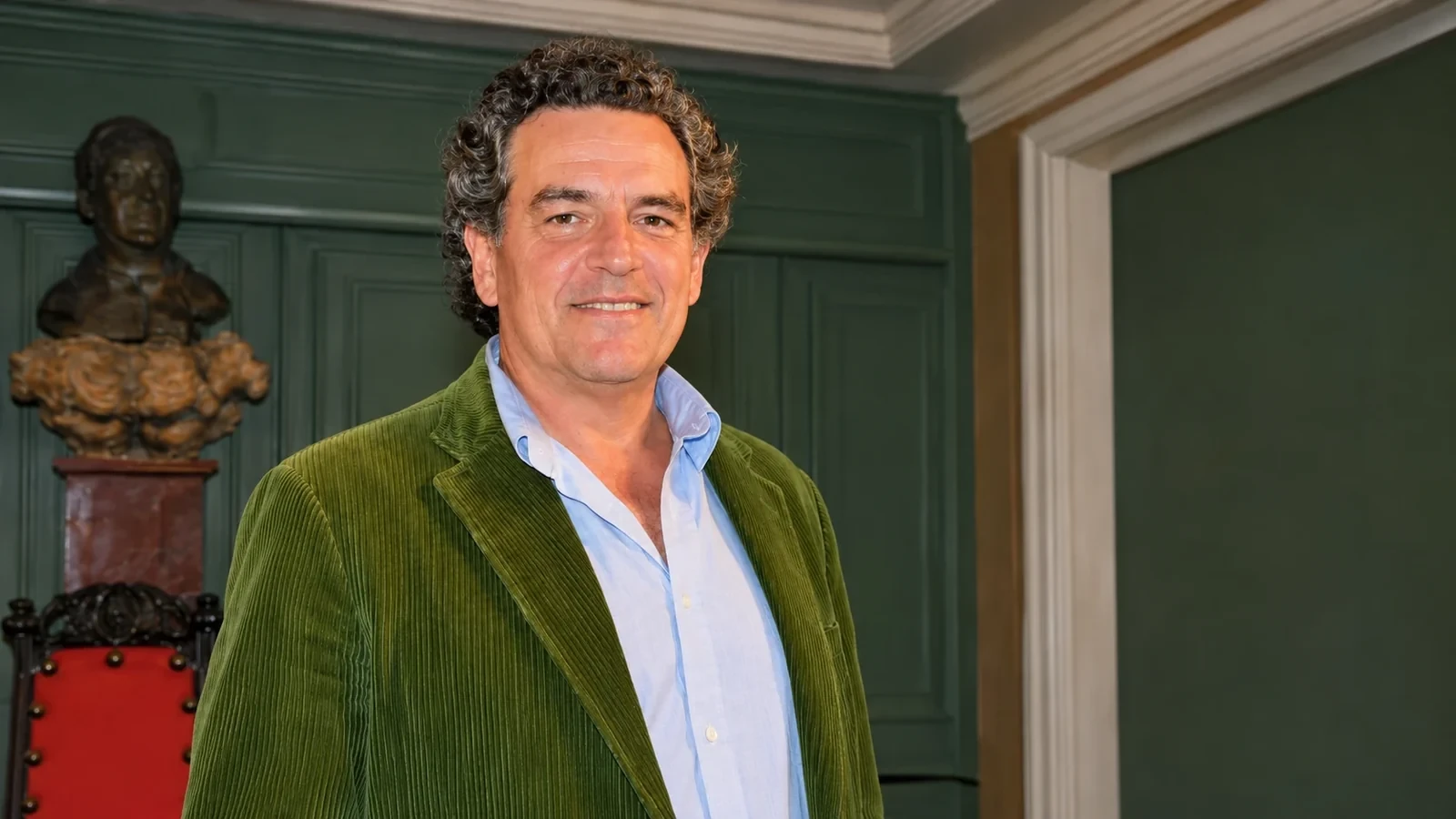
Carlos Scola Pliego is a Spanish filmmaker, credited professionally as Carlos Scola, and the only man the singer Sade has married. They married in 1989, and Sade moved to Madrid to live with him. Within about a year they had separated, and most later accounts say the marriage formally ended in 1995. His own work is a run of film credits that starts with script supervision on Spanish films in the late 1970s. It continues through assistant-director jobs on international productions shot in Spain, and in the late 1980s it reaches documentaries he directed in Central and East Africa.
Here is what the record shows about the man himself, the marriage that made his name known outside Spanish film circles, and where the details get muddled.
Scola, Pliego or Scola Pliego?
The name trips up many searches. Sade’s 1993 coverage in the Baltimore Sun and the Biography.com profile of Sade call him “Carlos Scola.” The FADER’s 2000 cover story and Hello! magazine call him “Carlos Pliego.” Wikipedia’s entry on Sade uses the full form, Carlos Scola Pliego.
Spanish naming conventions explain why all three point to one person. Spaniards usually carry two surnames, the first from the father and the second from the mother, and many use only the first one professionally. That would make Scola his working surname and Pliego his second surname. This is a reading of the convention, not something he has explained publicly. His film credits mostly appear as Carlos Scola. According to the celebrity site Zylo Magazine, which cites IMDb, he is credited as Carlos Scola Pliego on the 1985 miniseries Christopher Columbus.
He has no connection to two other names that turn up in the same searches. One is the Mexican businessman Ricardo Salinas Pliego. The other is the Italian director Ettore Scola.
Learning the trade on Spanish and international sets
Scola’s early career is documented only through film credits. Celebrity sites have collected them from IMDb, and the most detailed version is a 2023 AmoMama article. By that account, he started as a script supervisor on La boda del señor cura (1979) and Ópera prima (1980). A script supervisor tracks continuity, making sure scenes shot out of order will match when they are cut together. It is a common way into production work.
Between 1981 and 1985, AmoMama reports, he worked as an assistant director on nine film and television projects. Several were foreign productions shooting in Spain, a common arrangement in the 1980s that gave local crews work on larger sets. The titles listed for him include:
- Never Say Never Again (1983), Sean Connery’s return as James Bond. AmoMama says Scola was a second assistant director on the Spanish location shoot, uncredited.
- Curse of the Pink Panther (1983), in the same role and also uncredited.
- Eleni (1985), an early film for John Malkovich, which Zylo Magazine describes as Spanish-unit work.
- Christopher Columbus (1985), a television miniseries starring Gabriel Byrne and Virna Lisi.
Zylo, also citing IMDb, adds the Spanish titles Fin de un verano, Otelo (Comando negro), Hundra and G’olé!.
These credits are worth reading accurately. An uncredited second assistant director on the Spanish leg of a Bond film helped manage schedules, extras and crew movements for that part of the shoot. He did not direct the film, and some online profiles blur that distinction.
Directing his own documentaries in Africa
By the late 1980s, Scola’s credits change from supporting other directors to making his own films. Both projects he is best known for are documentaries shot in Africa.
The first is Ngira: Gorilas en la montaña (1988), a short filmed in what is now the Democratic Republic of the Congo. Accounts of who made it differ. AmoMama, drawing on IMDb, says Scola wrote, directed and produced it. Zylo Magazine cites Spain’s ICAA film catalogue, the state record of Spanish productions, which lists Ngira as a 1988 Spanish production directed by Carlos Scola and Lorenzo Queipo de Llano, with Scola also as producer. According to Zylo, the ICAA entry gives a running time of 25 minutes and a 35mm format. It names Javier Aguirresarobe as director of photography, and its synopsis describes the film as being about incidents during the making of a documentary on gorilla behaviour. If the catalogue citation is accurate, Ngira was a co-directed film about filming gorillas, not a straightforward wildlife documentary.
The second is Donde termina el corazón (1989), a longer Spanish-language documentary credited to Scola as director and writer. Zylo, citing IMDb, gives it about 95 minutes and describes a journey through African locations from the Ituri Forest to the outskirts of Nairobi.
These two films are the clearest evidence of what Scola chose to make when the decisions were his. They also date to 1988 and 1989, the same period as his marriage to one of the best-selling singers of the decade.
| Year | Title | Role (as reported) |
|---|---|---|
| 1979 | La boda del señor cura | Script supervisor |
| 1980 | Ópera prima | Script supervisor |
| 1983 | Never Say Never Again | Second assistant director, Spain shoot (uncredited) |
| 1983 | Curse of the Pink Panther | Second assistant director (uncredited) |
| 1985 | Eleni | Assistant director, Spanish unit |
| 1985 | Christopher Columbus (miniseries) | Assistant director |
| 1988 | Ngira: Gorilas en la montaña | Director and producer (co-director per ICAA, as cited by Zylo) |
| 1989 | Donde termina el corazón | Director and writer |
| 2007 | Goal II: Living the Dream | Additional crew |
The roles above come from IMDb and the ICAA catalogue as reported by AmoMama and Zylo Magazine.
Marrying Sade and the move to Madrid
Carlos Scola Pliego married Sade in 1989, and every account puts the marriage in Spain. The earliest description found is a profile by Gary Graff for MediaNews Group, published in the Baltimore Sun on September 3, 1993. It says she “moved to Madrid, Spain, for a time, marrying documentary filmmaker Carlos Scola in 1989 and separating from him a year later.” The same piece says a 1988 world tour had left her drained and pushed her to take time off after her third album, Stronger Than Pride.
Ekow Eshun’s cover story for issue 6 of The FADER in 2000, republished online in 2015, tells it from Sade’s side. Eshun writes that in the late ’80s she “fell in love with, and married, Spanish film director Carlos Pliego, relocating from London to Madrid as a consequence.”
Other accounts add details that should be treated more cautiously. AmoMama reports that the two met while Scola worked on three music videos from Sade’s 1985 album Promise, shot in Spain with director Brian Ward. It also reports that they married in a Spanish castle on October 11, 1989, and that he was with her in the studio during the making of Stronger Than Pride. AmoMama gives no contemporary source for the meeting or the date, and the earlier press accounts give only the year. The safe statement is that they married in Spain in 1989.
How long did the marriage last?
This is where online profiles go wrong most often. Most state flatly that the couple “divorced in 1995.” The fuller record has three different endpoints, and the difference between separating and divorcing explains most of the confusion.
| What happened | When | Source |
|---|---|---|
| Marriage | 1989 | Baltimore Sun (1993); The FADER (2000); Biography.com |
| Separation | About a year after the wedding, c. 1990 | Baltimore Sun (1993) |
| Relationship “broken apart for good” | By the making of Love Deluxe (released October 1992) | The FADER (2000) |
| Divorce | “Three years later,” about 1992 | Biography.com |
| Marriage ended | 1995 | Wikipedia, citing The Sunday Times (2010); Hello! (2026) |
The two accounts closest to the events agree that the relationship effectively ended early. The 1993 Baltimore Sun piece describes a separation about a year after the wedding, and Sade had returned to London by then. The FADER places the final break around Love Deluxe. The 1995 date appears later, in Wikipedia’s entry citing a 2010 Sunday Times interview by Robert Sandall. Hello! magazine repeats it in a July 2026 article, writing that the pair were married “for six years before parting ways in 1995.” Biography.com stands alone in saying they “divorced three years later.”
The best reading is that Sade and Carlos Scola Pliego separated around 1990 and that the marriage was formally over by 1995. That leaves room for a legal process that took several years to finish. No court record or statement from either of them confirms the exact year.
What Sade has said about the breakup
Neither Scola nor Sade has explained publicly why the marriage ended, and he has not given any interview about it. The closest thing to a first-hand account is what Sade told Eshun for The FADER in 2000:
“It was a very sad situation,” she said. “I had to leave… very quickly… with a very small bag. It took five years for it not to be something that affected the way I felt. It wasn’t like I was crawling out of bed every day or anything like that, but it would have really undermined love for me to get over it quickly. If you really love someone that’s the way it is.”
Eshun calls the relationship “always-turbulent.” He also ties the end of the marriage to a wider unsettled period, with Sade’s new house in North London subsiding and having to be rebuilt over 18 months.
Readers often ask whether Scola inspired Sade’s music. Eshun linked the restless mood of her 2000 album Lovers Rock partly to what had happened in the eight years since Love Deluxe, and the end of the marriage falls in that stretch. That is a critic’s interpretation of an album’s emotional tone. Sade has not said that any particular song is about Carlos Scola Pliego.
Did Carlos Scola Pliego and Sade have children?
Carlos Scola Pliego and Sade had no children together. Sade has one child, Izaak, born in 1996. By then she had separated from Scola and moved to Jamaica, and Izaak’s father is the music producer Bob Morgan, according to Hello! and Wikipedia’s entry on Sade.
Frequently asked questions
How many times has Sade been married?
Once. Hello! reported in July 2026 that her only marriage was to Carlos Pliego. Since 2007 she has been in a relationship with Ian Watts, a former Royal Marine, and Hello! describes her as a stepmother to his son.
How old is Carlos Scola Pliego, and what is he worth?
No birth date or financial figures for him have been published in reliable reporting, so any age or net-worth number online is a guess.
Where is Carlos Scola Pliego now?
His last reported credit is as additional crew on the 2007 football drama Goal II: Living the Dream, according to AmoMama citing IMDb. Nothing reliable has been published about his work, residence or circumstances since then.
Final Thoughts
Carlos Scola Pliego’s public record has two parts. One is a film career that runs from script supervision in 1979, through uncredited assistant-director work on productions as large as a Bond film, to his own documentaries in Africa in 1988 and 1989. The other is a marriage to Sade that took her to Madrid in 1989 and had effectively ended by the early 1990s, with 1995 usually given as its formal end.
Anyone checking a fact about him should rely on the 1993 and 2000 press accounts for the marriage. Film credits should be read as the role and year they record and nothing more. Precise wedding dates, castle venues and claims about his life after 2007 come from later celebrity sites without a contemporary source.
More from muxmagazine.com.
